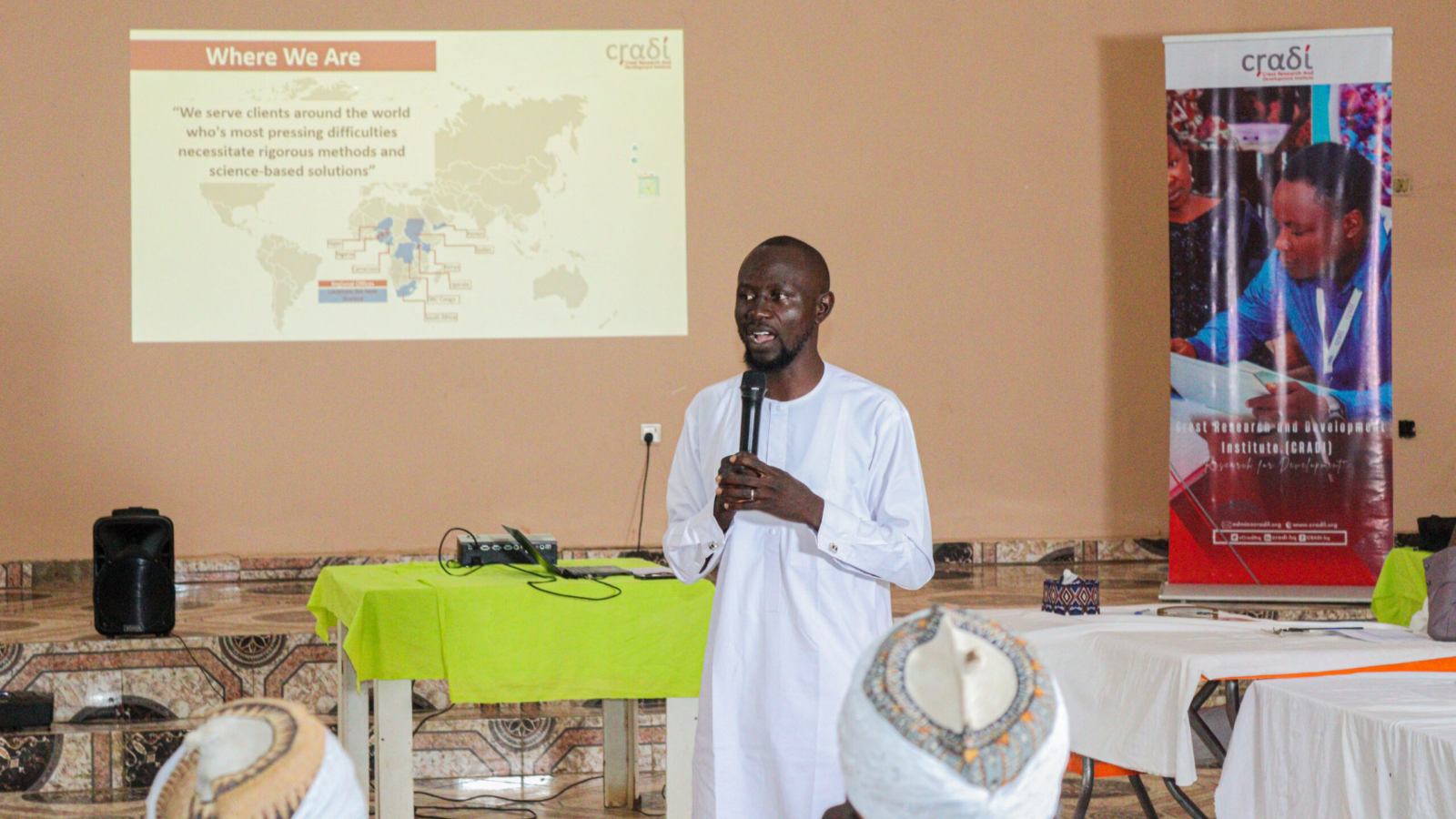
CRIN-VIN Dissemination Workshop - 2

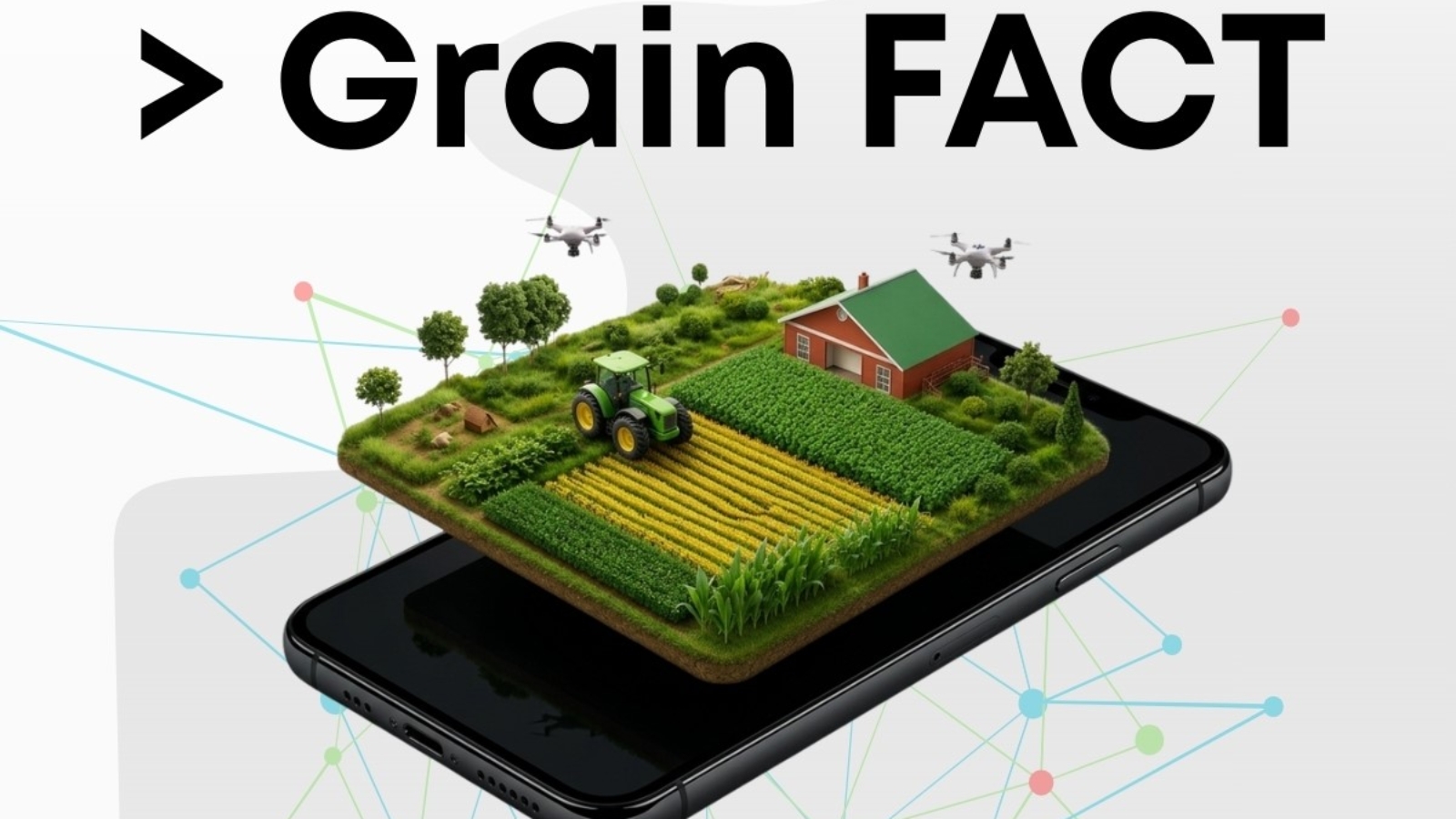
The Grain FACT Application

The Crest Research and Development Institute (CRADI), through its Agricultural Transformation Lab (ATL), is implementing a nationwide initiative to strengthen productivity, market efficiency, and innovation readiness within Nigeria’s agricultural ecosystem. A central component of this initiative is the FACT application: a digital market intelligence platform designed to collect, harmonise, and disseminate real-time data on commodity prices, production volumes, supply trends, and market dynamics across Nigeria’s 36 states, the Federal Capital Territory, and all 774 Local Government Areas (LGAs).

A nationwide baseline study is concurrently being conducted to ground the FACT application in field-verified realities, covering agricultural production patterns, units of trade and measurement standards, pricing structures, market actor networks, digital readiness, the innovation ecosystem, and gender and youth inclusion. Findings from this baseline, including a national glossary of local measurement units, a market actor database, and a ranked list of desired features by user type, will directly inform the functional design of the FACT application and will be made available to the appointed developer as foundational datasets.

CRADI now seeks to engage a qualified technology development partner (“the Developer”) to design, build, test, deploy, and support FACT as a dual-platform solution, comprising a public-facing responsive website and a native mobile application for Android and iOS, that together serve farmers, traders, processors, financial institutions, policymakers, and other agricultural value-chain actors across the country.

Download the Terms of Reference here.

Tsaku-For -BlogPost 2

Why State Social Registers Matter: Lessons from the Oxfam Baseline Evaluation of the European Union (EU), Social Safety Net (SOSAN) Project in Kebbi State.

By Francis Emmanuel Tsaku, Research Coordinator, OXFAM Baseline Evaluation of EU-SOSAN Project, Kebbi State

What happens when humanitarian and development actors create separate beneficiary lists while a validated government database already exists?

This important question emerged during the baseline evaluation of the European Union (EU) funded Social Safety Net (SOSAN) Project in Kebbi State. A Key Informant Interview (KII) with a representative of the State Operations Coordinating Unit (SOCU) Kebbi State, highlighted why stronger collaboration between government and development partners is essential for effective social protection programming.

Over the years, Kebbi State has made substantial investments in developing and maintaining the state’s Social Register that captures poor and vulnerable households across all 21 Local Government Areas (LGAs). Developed through community-based targeting, household verification, and regular updates, the register provides a credible, evidence-based database for identifying households most in need of social assistance. Despite the availability of this resource (the state Social Register), some humanitarian and development programmes continue to establish parallel beneficiary identification systems. This can increase implementation costs, create duplication, weaken targeting, and miss opportunities to strengthen existing government systems.

During the interview, SOCU encouraged Oxfam and its implementing partners, Solidarités International, Jireh Doo Foundation, and the Association of Women Living with HIV/AIDS in Nigeria (ASWHAN), INGOs, NGOs and government agencies to utilize the State Social Register in implementing upcoming interventions. According to the stakeholder, leveraging the existing register will improve targeting accuracy, promote transparency, reduce costs, and ensure that assistance reaches the poorest and most vulnerable households while reinforcing government-owned social protection systems.

The interview also emphasized that beneficiary selection should remain objective, evidence-based, and free from political influence. Effective social protection is not only about funding programmes; it is equally about investing in credible institutions, reliable data, and accountable governance. In conclusion, as Nigeria continues to expand its social protection programmes, the Kebbi experience offers a valuable lesson: lasting impact is achieved by strengthening existing systems, fostering collaboration, and using evidence to guide decision-making, not by creating parallel structures.

Stop Starting Over

By Imo Silas Korshima

Last week I spent three days in Makurdi with partners, government officials and programme staff designing the next phase of the SPRiNG (Strengthening Peace and Resilience in Nigeria) programme. A lot was discussed across those three days, but one idea kept surfacing in different forms, in different sessions, from different voices: stop starting over.

In development work, new funding cycles have a way of quietly erasing what came before. New designs arrive, new frameworks get introduced, and communities that were carefully engaged find themselves re-engaged from scratch. The lessons from the field get filed into reports that few people read, and a lot of what actually worked disappears, not because it failed, but because the new cycle simply had no room for it. SPRiNG is trying to push back on that pattern, and the entire design logic for Year 3 was built around a single question: what has already taken root, and how do we grow it?

That sounds straightforward until you try to do it. Scaling something that worked is genuinely harder than designing something new, because an intervention rarely works in isolation. It works because of the relationships built around it, the local champions who believed in it, the specific tension it happened to address at exactly the right moment. Lift it out of that context and replicate it somewhere else without understanding those dynamics, and you might reproduce the activity while losing everything that gave it meaning.

What the workshop pushed partners to do was go back before going forward. Before designing a single new activity, the question on the table was whether the structures built in Year 1 were still standing on their own, whether trained community members were still applying what they had learned without the programme propping them up, and whether the small local innovations that never made it into formal reports were being captured before the people who knew about them moved on. That last point struck me. Institutional memory in this kind of work is fragile, and when phases end and staff change, a lot of practical knowledge simply walks out the door.

The most useful thing I took from Makurdi is that adaptive programming is less a methodology and more a habit of honesty. It requires being genuinely willing to sit with uncomfortable evidence, to ask whether your assumptions about what worked are based on data or on hope, and to let the answers actually reshape what you do next. The programmes that manage this well are not necessarily the ones with the most sophisticated frameworks. They are the ones where people in the room feel safe enough to say “that didn’t work as well as we thought” and where that admission leads somewhere productive rather than getting smoothed over in the final report. That willingness, more than any revised log frame or new workstream structure, is what the next phase of SPRiNG seemed to be reaching for. Whether implementation bears it out is another matter. But asking the right questions at the design stage is at least a credible place to start.

Sam and Imo-Spring-Blog post Copycopy 2026-06-22 at 12.01.46 PM

When Co-Creation Changes Everything: Reflections from the SPRiNG Year 3 Co-Creation Workshop

By Adide Samuel Emelis, Project Manager, BRIDGE Project – CRADI

There’s something quietly powerful about sitting in a room where everyone; implementing partners, government agencies, programme teams; is genuinely working toward the same goal. That’s what I experienced in Makurdi from the 16th to 18th of June, 2026, at the SPRiNG Year 3 Co-Creation Workshop, and I haven’t stopped thinking about it since.

Let me give you a little context.

When Crest Research and Development Institute (CRADI) joined the Strengthening Peace and Resilience in Nigeria (SPRiNG) programme in Year 2 as an implementing partner on the “Building Resilient Communities: Integrated Climate Adaptation and Conflict Mitigation in Nigeria’s Middle-Belt Region (BRIDGE)” Project, our eight-month initiative focused on climate adaptation and conflict mitigation across Plateau and Benue States.  We came in with energy, commitment, and honestly, a few gaps we didn’t even know we had. No one sat us down at the start and said, “here’s how the programme thinks, here’s what we’re tracking, here are the indicators that matter.” We hit the ground running, and we ran hard. But there were moments; in reporting cycles, in implementation decisions; where we could feel the disconnect. We were doing good work, but we weren’t always singing from the same hymn sheet as the broader programme.

That gap wasn’t anyone’s fault. It was structural. And it showed up in ways that only become visible in retrospect. So, when the invitation arrived for the Year 3 Co-Creation Workshop, I wasn’t entirely sure what to expect. What I got was something I wish we’d had from day one.

Over three days, the SPRiNG team walked us through everything: the revised state implementation strategy, workstream priorities, the MEL framework, the GEDSI approach, even the nuts and bolts of proposal and budget development. Government ministries and agencies were in the room too: the Benue State Commission for Peace and Reconciliation; Bureau for International Cooperation and Development; the Ministry of Women’s Affairs, the Benue Civil Protection Guard; Ministry of Water Resources, Environment, and Climate Change – the full ecosystem of actors that this work ultimately depends on. We didn’t just receive information; we brainstormed together, identified intervention areas collaboratively, and by the close of the workshop, we witnessed the unveiling of the SPRiNG Benue State Compact (2026–2027) by the SPRiNG Team Leader, Dr. Okoha Ukiwo. That moment felt like more than a formality. It felt like a commitment made in public, by people who had just spent three days building it together.

Here’s what struck me most: this is what adaptive programming actually looks like in practice. It’s easy to talk about “learning and adaptation” as a concept. It’s another thing entirely to watch a programme look at its Year 2 experience, acknowledge where the gaps were, and deliberately redesign its entry point for partners in Year 3. That takes institutional honesty. And it makes a real difference.

As implementing partners, we now go into Year 3 knowing what’s expected of us, what success looks like, and how our work connects to the larger picture. That clarity isn’t just administratively convenient; it’s the difference between implementing in isolation and implementing as part of something coherent.

Co-creation, when it’s done well, isn’t a workshop format. It’s a philosophy. It says: the people doing the work on the ground have knowledge that should shape the programme, not just execute it. And reciprocally, partners deserve to understand the programme well enough to genuinely contribute to it.

I left Makurdi feeling something I don’t always feel at the end of a three-day workshop: genuinely ready. Ready to go into Year 3 not just with a plan, but with context, alignment, and a sense of shared ownership.

That, to me, is worth writing about.

1...IMG_20260127_131856.jpg

Building Peace from the Ground Up: Five Lessons from Nigeria’s Frontline Communities

By: Imo Silas, Korshima

Last week, I sat in a room filled with peacebuilders, government officials, and community leaders at the SPRING Programme Annual Learning Event in Abuja. What stayed with me was not the polished presentations or carefully framed policy frameworks, but a simple observation from Barrister Chris Ngwodo: “Federal security agents rotate frequently, but insecurity is rooted locally.”

That statement captured a fundamental truth about sustainable peacebuilding in Nigeria. The drivers of conflict are deeply local, and so must be the solutions. Over two days of rich conversations and honest reflections, what emerged was not a neat blueprint for peace, but something far more valuable. We heard grounded evidence of what is working in communities, why it is working, and what it takes to sustain it.

In this piece, I share some of my key takeaways from the two-day event.

Beyond Putting Women in the Room

Lantana Abdullahi from the Women for Positive Peacebuilding Initiative posed a question that challenged everyone present to think more deeply. She asked whether it is truly enough to include women, or whether we must ask which women are included and whether they have real influence over decisions.

Nigeria has close to twenty state action plans on Women, Peace and Security. On paper, this appears impressive. In practice, the impact depends entirely on whether these plans translate into real power, voice, and agency for women at the community level.

Drawing from her experience, Abdullahi explained that involving women in decisions around resource allocation did more than improve fairness. It transformed accountability. When women helped shape the rules, communities adhered to those rules differently. The lesson was clear. Peace processes that sideline women are not only unjust, they are less effective.


The Invisible Wound

One of the most sobering contributions came from Dr Maji Peterz of Carefronting Nigeria, who drew attention to the often neglected issue of mental health. He warned that without deliberate attention to psychological wellbeing, the effects of trauma will surface more forcefully in the years ahead.

Communities affected by conflict across Nigeria have lived through displacement, loss, and violence. Yet peacebuilding efforts frequently prioritize reconciliation and coexistence without creating adequate space for healing. Dr Peterz described efforts to support communities in processing trauma and rebuilding emotional resilience, emphasizing that this work is not an optional addon to peacebuilding.

Mental health support is foundational. Communities burdened by unaddressed trauma struggle to sustain peace, regardless of how well designed other interventions may be. Without healing, cycles of fear, mistrust, and violence are likely to re-emerge in new forms.

Young People Know What We Do Not

Noya Sedi from Global Rights offered a reminder that felt obvious once it was said. Young people are often the first to know when violence is occurring or when drug abuse is spreading within a community. Survivors frequently confide in peers long before approaching elders or authorities.

When young people are excluded from designing solutions, vital entry points for prevention are missed. This insight connected strongly with the keynote message from Dr Richard Montgomery, the British High Commissioner to Nigeria, who reminded participants that peace is not a single event but an ongoing process.

Young people are not only future leaders. They are current intelligence assets with access to networks and information that others simply do not have. Treating them solely as beneficiaries, rather than partners, limits the effectiveness of peace efforts.

Peace Does Not Stop at State Lines

Another powerful lesson from the event was the recognition that conflict dynamics do not respect administrative boundaries. Grazing routes extend across states. Criminal networks operate across borders. Climate impacts and resource pressures spill from one community to another.

Josephine Habba emphasized that peacebuilding efforts in Benue must also engage boundary communities in Nasarawa, because conflict flows freely across those lines. Many programmes are designed within neat jurisdictional limits, but lived realities are far messier.

For the herder whose cattle are stolen or the farmer whose crops are destroyed, state boundaries are irrelevant. The most effective interventions discussed during the event were those that deliberately addressed these cross-border dynamics rather than ignoring them.


What this Means Going Forward

The most important takeaway from the event is that there is no universal blueprint for peace. What works in Kaduna may not work in Plateau. The common thread is not a specific intervention, but an approach rooted in local knowledge, evidence-based adaptation, and institutions that enable communities rather than dominate them. Sustainable peace emerges when solutions are designed with communities, not imposed on them.
The Conversation Continues

What community led peace innovations have you witnessed? How is your organization building local capacity that continues long after project timelines end? We invite you to share your experiences with us at research@cradi.org or connect with us through our social media platforms.


Youth FORB Flyer

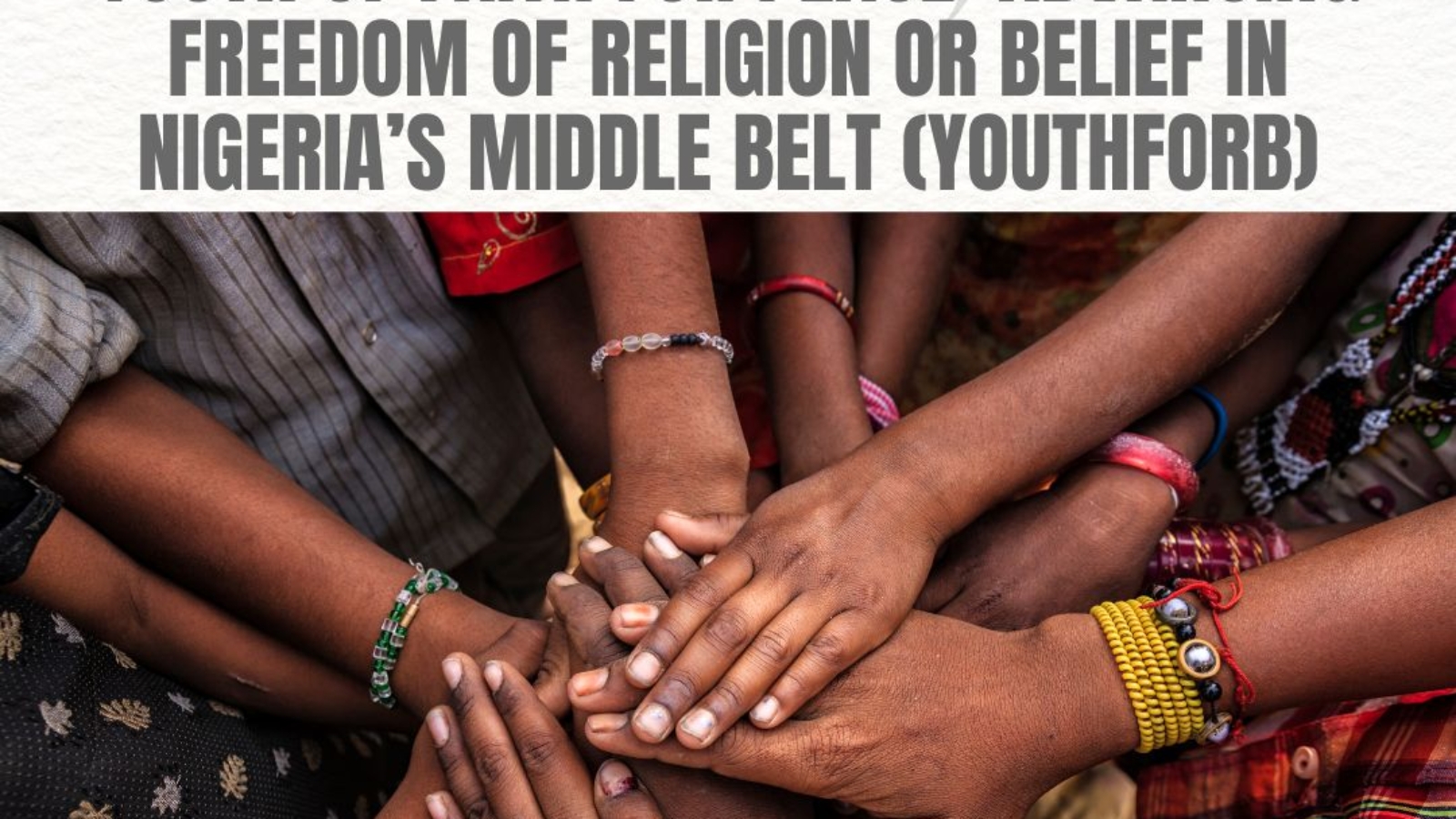
CALL FOR APPLICATIONS: Youth of Faith for Peace: Advancing Freedom of Religion or Belief in Nigeria’s Middle Belt (YouthFORB)

Crest Research and Development Institute (CRADI) is seeking a highly skilled Data Analyst to join its team and support a diverse range of research activities both across Nigeria and internationally. This role is crucial to CRADI’s mission of fostering evidence-based solutions to tackle complex societal challenges, requiring a professional who can leverage advanced data management, analysis, and interpretation techniques to ensure that research outputs are not only insightful but also reliable and actionable.

Youth FORB Flyer

CALL FOR APPLICATIONS: Youth of Faith for Peace: Advancing Freedom of Religion or Belief in Nigeria’s Middle Belt (YouthFORB)

Crest Research and Development Institute (CRADI) is seeking a highly skilled Data Analyst to join its team and support a diverse range of research activities both across Nigeria and internationally. This role is crucial to CRADI’s mission of fostering evidence-based solutions to tackle complex societal challenges, requiring a professional who can leverage advanced data management, analysis, and interpretation techniques to ensure that research outputs are not only insightful but also reliable and actionable.

CPVI Announcement (2)

Call for Volunteers: Join the CRADI Professional Volunteer Initiative (CPVI)!Data Analyst

Crest Research and Development Institute (CRADI) is seeking a highly skilled Data Analyst to join its team and support a diverse range of research activities both across Nigeria and internationally. This role is crucial to CRADI’s mission of fostering evidence-based solutions to tackle complex societal challenges, requiring a professional who can leverage advanced data management, analysis, and interpretation techniques to ensure that research outputs are not only insightful but also reliable and actionable.