Hands Up_Bigger and Better and he River.jpg

Before the Flood: How Community Voices Power Early Warning in Buruku

By: Bandin Glory Joseph

In communities such as Buruku in Benue State, climate change is not understood as an abstract or distant concept. It is felt in very practical and immediate ways through observable changes in the environment. Rising river levels, increasingly unpredictable and delayed rainfall patterns, and declining agricultural yields have become part of everyday experience. For predominantly agrarian communities, these shifts directly affect livelihoods, food security, and household stability. As natural resources such as arable land and water become more constrained, the pressure on them intensifies, often heightening competition and, in some cases, deepening tensions within and between communities.

It is within this context that the need for a more integrated and locally grounded response becomes evident. Recognizing the interconnected nature of climate vulnerability and conflict dynamics, Crest Research and Development Institute (CRADI) implemented the Building Resilient Communities: Integrated Climate Adaptation and Conflict Mitigation in Nigeria’s Middle Belt (BRIDGE) Project. This intervention forms part of the broader SPRiNG initiative supported by the UK Foreign, Commonwealth and Development Office (FCDO), which seeks to strengthen resilience and stability in fragile contexts.

The BRIDGE Project is designed to support vulnerable communities across Plateau and Benue States by addressing both environmental and social dimensions of resilience. Its core objective is to enhance communities’ capacity to adapt to climate variability while promoting peaceful and inclusive management of natural resources. The project places particular emphasis on strengthening local systems, empowering women, youth, and marginalized groups, and improving community preparedness through early warning and anticipatory action mechanisms.

A central component of this approach is the establishment of community-based Climate Early Warning Monitors (EWMs). These individuals are selected from within the communities and are equipped to systematically observe, verify, and share timely information on emerging climate-related risks. Their role involves observing environmental changes, validating information, engaging with relevant agencies where necessary, and sharing timely and accurate warnings with their communities to support early action.

By grounding early warning systems in local knowledge and participation, the project strengthens responsiveness while also fostering trust, collaboration, and collective action.

From Noticing to Structured Response

To support the effectiveness of these Early Warning Monitors, Activity 3.1: Establish and Train Climate Early Warning Monitors was implemented to equip them with the practical skills and tools needed to carry out their role effectively.

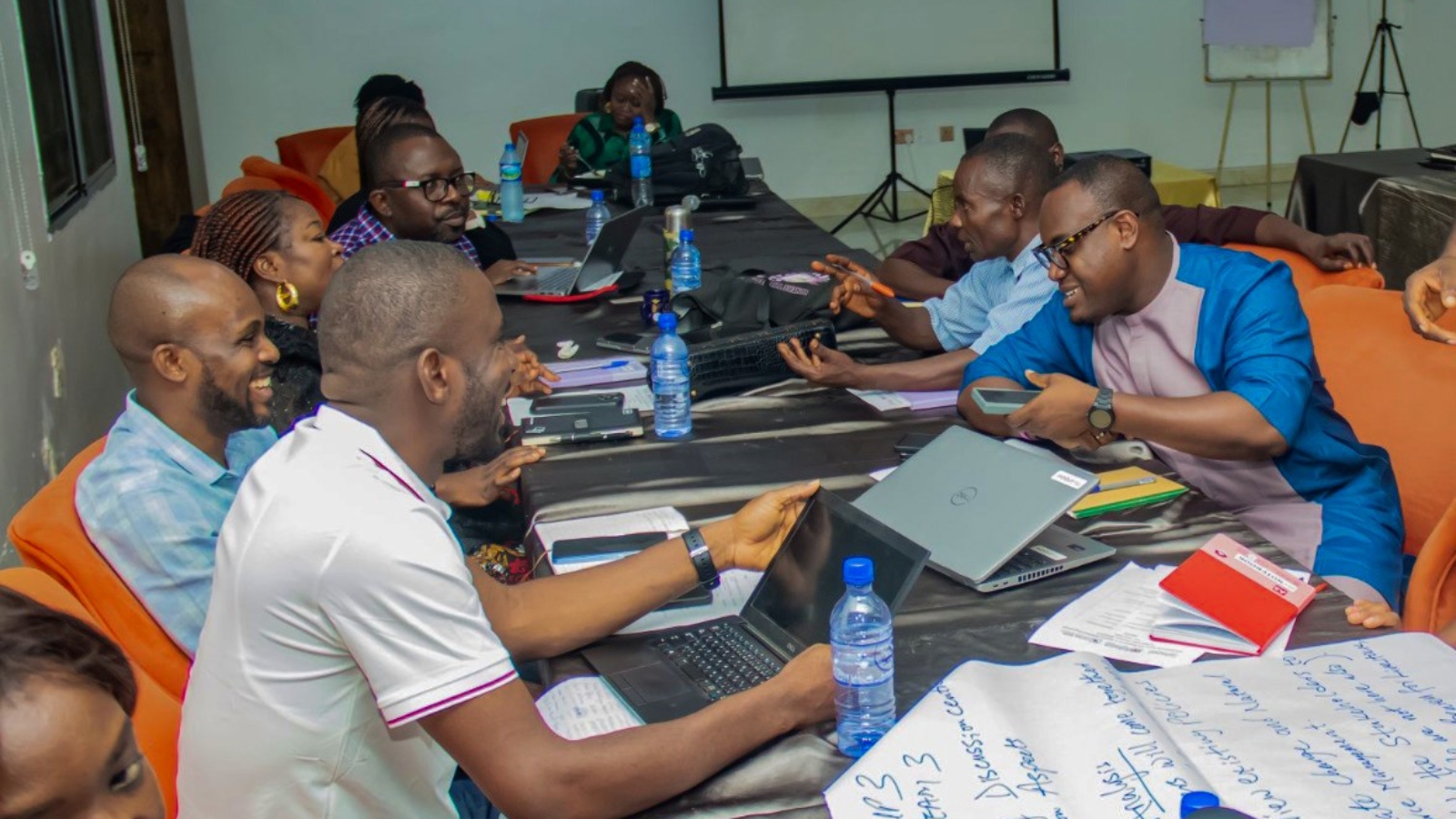
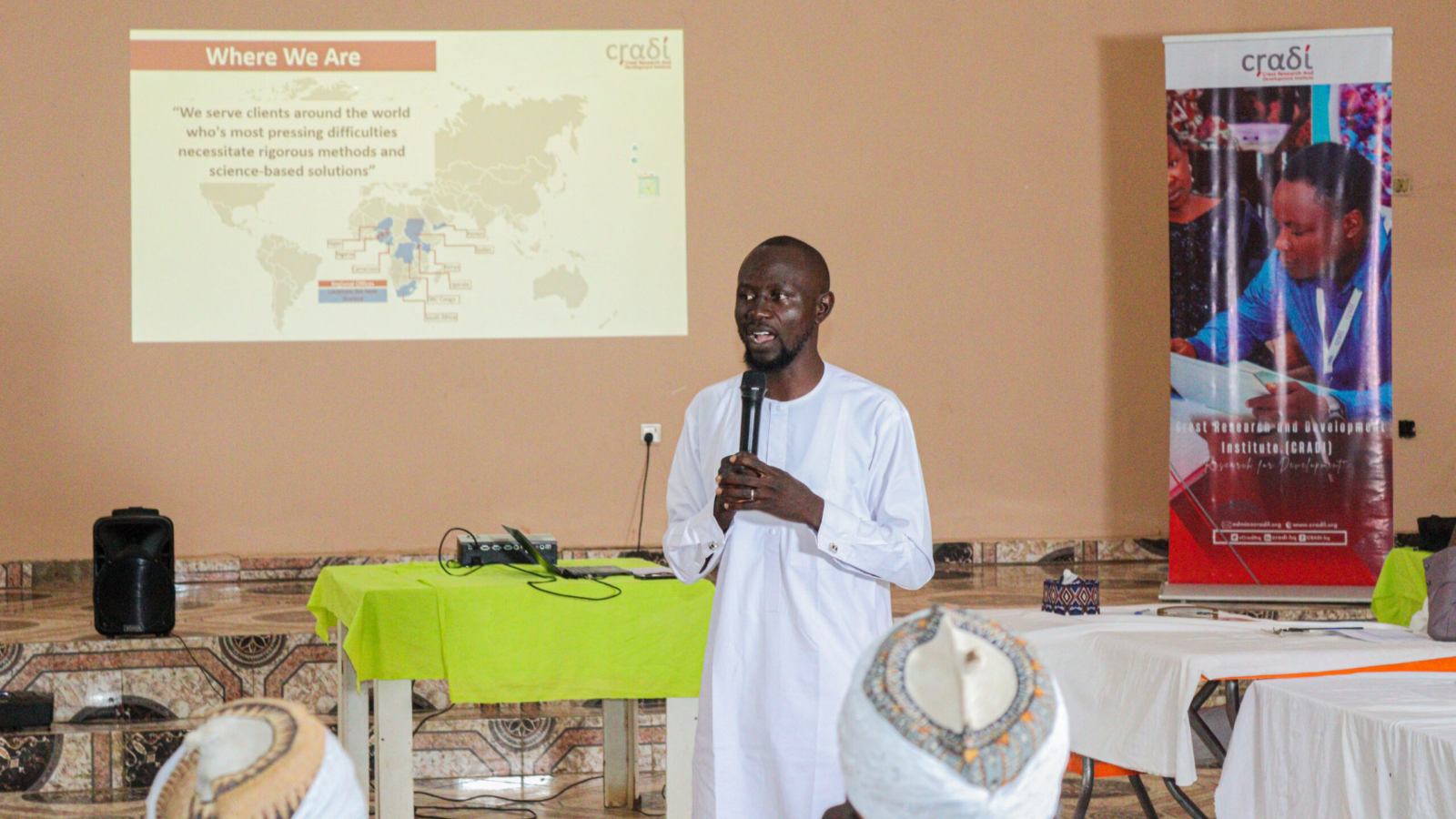
At a training session held at the Youth Centre in Buruku, 60 community members came together, not merely as participants, but as individuals stepping into a critical community function. As newly designated Early Warning Monitors, they are now positioned to support timely communication, link with relevant stakeholders, and promote early response within their communities.


From Awareness to Structured Response

For many participants, the signs of climate variability were already familiar, unusual river patterns, shifting rainfall, and prolonged dry spells had long been observed within their communities. What had been missing, however, was not awareness, but a structured system to translate these observations into timely action.

The training addressed this gap by shifting participants from passive observation to intentional and coordinated response.

Participants were guided on how everyday environmental changes can serve as early warning signals when properly identified, documented, verified, and communicated.

As one participant shared:

“This training has opened my eyes to how we can identify early signs of flooding and inform others before it becomes a disaster.”

Tools for Timely Action

To support the work of Early Warning Monitors and strengthen real-time information flow, participants were introduced to the Early Warning Early Response (EWER) platform, a digital tool designed to capture, verify, and disseminate climate risk information, including flood alerts, drought trends, and extreme weather patterns.

Recognizing varying levels of digital literacy, the training adopted a hands-on and inclusive approach. Participants were supported step-by-step to create email accounts, download the application, and practice submitting real-time reports.

In my MERL role, I supported participant onboarding onto the EWER platform by assisting with email setup and app usage, ensuring accurate attendance and registration, and capturing participant insights to inform ongoing learning and improve implementation. This ensured that participants were not only introduced to the tool but were able to use it confidently and independently by the end of the session.

As one participant noted:

“Even though I had some difficulty at first, I was able to download it and submit a report. This will help us share information quickly.”

Blending Technology with Trust

While digital tools enhance speed and coordination, participants emphasized that information in their communities still travels fastest through trusted and familiar channels such as community meetings, marketplaces, and local networks. The training therefore encouraged a blended approach, combining digital reporting tools with traditional communication systems to ensure wider reach, trust, and inclusion.

“I learned how to use both my phone and local communication methods to spread early warnings, which will make a big difference in our community,” one participant explained.


Why Verification Matters

Before the training, early warnings were often shared informally, sometimes without verification. Through the sessions, participants gained a clearer understanding of the importance of accuracy, validation, and coordination with relevant stakeholders.

“Before now, we only relied on observation without proper guidance. Now we understand how to verify information and pass correct messages to our people,” a participant reflected.

In early warning systems, speed matters, but accuracy remains essential.

Building Resilience from Within

Like many community-based interventions, the process was not without challenges. Some participants required additional time to adapt to digital tools, and occasional network constraints slowed progress. Yet these challenges reinforced an important lesson: resilience is not built under perfect conditions, but through continuous learning, adaptation, and collective effort.

By the end of the training, participants were no longer just attendees. They had become part of a growing, community-driven early warning system capable of identifying risks early, sharing timely information, and supporting coordinated responses.

One Community, Many Watchful Eyes

The experience in Buruku reflects a broader goal of the BRIDGE Project: strengthening local systems so that communities are not only aware of climate risks but are equipped to act on them.

Climate shocks may be inevitable, but their impacts do not have to be devastating. When communities are equipped with the right knowledge, supported with practical tools, and connected through trusted systems, they can act early, protect livelihoods, and reduce vulnerability. In Buruku, that shift is already underway.

Because sometimes, the difference between crisis and preparedness is not just a forecast, it is a person who sees the signs and chooses to act.
Gemini_Generated_Consultant

CONSULTANCY FOR Endline Evaluation of the Building Resilient Communities: Integrated Climate Adaptation and Conflict Mitigation in Nigeria’s Middle-Belt Region (BRIDGE) Project

Crest Research and Development Institute seeks a Monitoring, Evaluation, Research and Learning (MERL) Assistant who will support the development of research documents including research proposals, inception reports and evaluation reports and supervise field teams in data collection and the coordination of regional working group coordination meetings.

Call for Data Collectors for Freedom of religion and Belief (FoRB) Project in the 36 states of Nigeria

Call for Data Collectors for Freedom of Religion and Belief Research


Crest Research and Development Institute (CRADI) is an independent nonprofit research and development organization committed to improving the human condition through evidence-based research humanitarian response and learning. As part of its ongoing research initiatives CRADI is conducting a  Freedom of Religion and Belief study across Nigeria.


To support this exercise CRADI seeks to recruit qualified and experienced Data Collectors to conduct field data collection across all states. Selected individuals will play a critical role in gathering accurate reliable and timely data.


  1. Purpose of the Assignment

The purpose of this assignment is to support high-quality field data collection through trained personnel who can engage respondents respectfully follow protocols accurately and ensure integrity of collected information. Data Collectors will contribute directly to evidence generation that supports informed decision-making and programmatic interventions.


  1. Scope of Work

Under the supervision of the assigned Field Supervisor and Research Team the Data Collectors will:

  • Participate in a mandatory briefing session covering tools methodology ethics and expectations
  • Conduct structured interviews and surveys within assigned locations
  • Accurately record responses using approved data collection tools
  • Adhere strictly to research ethics including informed consent confidentiality and neutrality
  • Ensure timely submission of complete and verified data
  • Report field challenges observations or concerns to supervisors promptly


  1. Deliverables
  • Selected Data Collectors will be expected to:
  • Attend the mandatory pre-field briefing
  • Complete all assigned interviews within the designated timeframe
  • Submit clean accurate and complete datasets daily
  • Provide brief field notes or observations when required
  • Comply fully with all reporting instructions and deadlines


  1. Duration


  • This is a short-term field assignment:
  • Briefing: Wednesday 18 February 2026
  • Fieldwork: Thursday to Saturday 19 to 21 February 2026
  • Applicants must be available for the full duration.


  1. Positions Available

Two Data Collectors per state


  1. Application Deadline


6:00 PM | Tuesday 17 February 2026


Interested candidates should apply using this link.

1...IMG_20260127_131856.jpg

Building Peace from the Ground Up: Five Lessons from Nigeria’s Frontline Communities

By: Imo Silas, Korshima

Last week, I sat in a room filled with peacebuilders, government officials, and community leaders at the SPRING Programme Annual Learning Event in Abuja. What stayed with me was not the polished presentations or carefully framed policy frameworks, but a simple observation from Barrister Chris Ngwodo: “Federal security agents rotate frequently, but insecurity is rooted locally.”

That statement captured a fundamental truth about sustainable peacebuilding in Nigeria. The drivers of conflict are deeply local, and so must be the solutions. Over two days of rich conversations and honest reflections, what emerged was not a neat blueprint for peace, but something far more valuable. We heard grounded evidence of what is working in communities, why it is working, and what it takes to sustain it.

In this piece, I share some of my key takeaways from the two-day event.

Beyond Putting Women in the Room

Lantana Abdullahi from the Women for Positive Peacebuilding Initiative posed a question that challenged everyone present to think more deeply. She asked whether it is truly enough to include women, or whether we must ask which women are included and whether they have real influence over decisions.

Nigeria has close to twenty state action plans on Women, Peace and Security. On paper, this appears impressive. In practice, the impact depends entirely on whether these plans translate into real power, voice, and agency for women at the community level.

Drawing from her experience, Abdullahi explained that involving women in decisions around resource allocation did more than improve fairness. It transformed accountability. When women helped shape the rules, communities adhered to those rules differently. The lesson was clear. Peace processes that sideline women are not only unjust, they are less effective.


The Invisible Wound

One of the most sobering contributions came from Dr Maji Peterz of Carefronting Nigeria, who drew attention to the often neglected issue of mental health. He warned that without deliberate attention to psychological wellbeing, the effects of trauma will surface more forcefully in the years ahead.

Communities affected by conflict across Nigeria have lived through displacement, loss, and violence. Yet peacebuilding efforts frequently prioritize reconciliation and coexistence without creating adequate space for healing. Dr Peterz described efforts to support communities in processing trauma and rebuilding emotional resilience, emphasizing that this work is not an optional addon to peacebuilding.

Mental health support is foundational. Communities burdened by unaddressed trauma struggle to sustain peace, regardless of how well designed other interventions may be. Without healing, cycles of fear, mistrust, and violence are likely to re-emerge in new forms.

Young People Know What We Do Not

Noya Sedi from Global Rights offered a reminder that felt obvious once it was said. Young people are often the first to know when violence is occurring or when drug abuse is spreading within a community. Survivors frequently confide in peers long before approaching elders or authorities.

When young people are excluded from designing solutions, vital entry points for prevention are missed. This insight connected strongly with the keynote message from Dr Richard Montgomery, the British High Commissioner to Nigeria, who reminded participants that peace is not a single event but an ongoing process.

Young people are not only future leaders. They are current intelligence assets with access to networks and information that others simply do not have. Treating them solely as beneficiaries, rather than partners, limits the effectiveness of peace efforts.

Peace Does Not Stop at State Lines

Another powerful lesson from the event was the recognition that conflict dynamics do not respect administrative boundaries. Grazing routes extend across states. Criminal networks operate across borders. Climate impacts and resource pressures spill from one community to another.

Josephine Habba emphasized that peacebuilding efforts in Benue must also engage boundary communities in Nasarawa, because conflict flows freely across those lines. Many programmes are designed within neat jurisdictional limits, but lived realities are far messier.

For the herder whose cattle are stolen or the farmer whose crops are destroyed, state boundaries are irrelevant. The most effective interventions discussed during the event were those that deliberately addressed these cross-border dynamics rather than ignoring them.


What this Means Going Forward

The most important takeaway from the event is that there is no universal blueprint for peace. What works in Kaduna may not work in Plateau. The common thread is not a specific intervention, but an approach rooted in local knowledge, evidence-based adaptation, and institutions that enable communities rather than dominate them. Sustainable peace emerges when solutions are designed with communities, not imposed on them.
The Conversation Continues

What community led peace innovations have you witnessed? How is your organization building local capacity that continues long after project timelines end? We invite you to share your experiences with us at research@cradi.org or connect with us through our social media platforms.


Youth FORB Flyer

CALL FOR APPLICATIONS: Youth of Faith for Peace: Advancing Freedom of Religion or Belief in Nigeria’s Middle Belt (YouthFORB)

Crest Research and Development Institute (CRADI) is seeking a highly skilled Data Analyst to join its team and support a diverse range of research activities both across Nigeria and internationally. This role is crucial to CRADI’s mission of fostering evidence-based solutions to tackle complex societal challenges, requiring a professional who can leverage advanced data management, analysis, and interpretation techniques to ensure that research outputs are not only insightful but also reliable and actionable.

Bandin on duty

From Dialogue to Action: Buruku Communities Unite for Climate Resilience

By: Bandin Glory Joseph 


When the first rains arrived late in Buruku, many farmers returned to their fields only to find their seedlings already wilting. One elderly farmer described how he stood in the middle of his land and felt an unfamiliar fear. The rains had failed him, and for the first time in his life, he could not predict what the season would bring. That simple story, shared at the Buruku Youth Centre, captured the reason the community gathered. Climate change is no longer a distant idea. It is changing daily life in ways that people can see and feel. The meeting brought together seventy-two participants under CRADI’s BRIDGE Project. They included farmers, women, youth, traditional rulers and persons with disabilities. The Ter Buruku and a representative of the Local Government Chairman opened the session by acknowledging the challenges everyone in the room already knew too well. The rainy season is now shorter and more unpredictable. The heat is stronger. Water sources are drying up. The soil is losing the strength it once had. These shifts are affecting livelihoods, household survival and the future of young people who depend on the land.

After the opening remarks, the discussion quickly became personal. Elders shared memories of how their fields and rivers once behaved. They described streams that no longer flow throughout the year and soils that respond differently to planting. Women spoke about the pressure these changes place on their homes, their farms and their ability to provide food. They explained how sudden dry spells, erosion and new pest outbreaks are stretching the resources of many households. Youth voiced concerns about what lies ahead for their generation. They spoke about extreme heat, water scarcity, flooding and land degradation that threaten both farming and the wider community. Although each group entered the room with different experiences, their concerns pointed to the same reality. Farming inputs are becoming too expensive. Water is harder to access. Road networks make it difficult to reach markets, and agricultural extension services are not consistent enough to support farmers as they adapt to new conditions. Yet, despite these shared difficulties, the atmosphere was hopeful rather than discouraged.

The conversation gradually shifted from describing problems to identifying workable solutions. Elders suggested planting varieties that survive dry conditions and exploring irrigation where possible. Women proposed practical actions such as planting trees around homesteads, adopting better seed varieties and forming women-led groups that can spread climate awareness. Youth offered their energy and creativity, suggesting community tree planting, learning safer agricultural practices and mobilising other young people to protect the environment. These ideas flowed naturally because they were rooted in the community’s lived experience.

By the end of the session, the room had shaped a clear direction. Participants agreed to strengthen existing community structures such as youth associations, women’s committees and farmer groups so that action can begin from within the community rather than waiting for outside support. They committed to regular awareness sessions that keep climate resilience at the centre of community conversations. They also agreed to promote improved farming practices in households and to welcome regular follow-up visits that sustain progress. Traditional rulers and local authorities were identified as essential partners whose continued involvement can ensure community action is supported by stronger governance. As people left the hall, the atmosphere was noticeably different. What began as a day of sharing concerns had transformed into a unified decision to act. The participants walked away with new knowledge, shared understanding and a sense of direction. Buruku cannot control the changing climate, but its people have chosen not to face it in silence or isolation. They are responding with clarity, unity and a firm belief that resilience starts from within the community itself. The BRIDGE Project is proud to support this journey. If you are a community member, practitioner or policymaker who wants to support or learn from these efforts, join us. Share your experiences, participate in upcoming trainings, or connect with CRADI to explore how your community can build climate resilience. Together, we can turn dialogue into action and create solutions that last.


Youth FORB Flyer

CALL FOR APPLICATIONS: Youth of Faith for Peace: Advancing Freedom of Religion or Belief in Nigeria’s Middle Belt (YouthFORB)

Crest Research and Development Institute (CRADI) is seeking a highly skilled Data Analyst to join its team and support a diverse range of research activities both across Nigeria and internationally. This role is crucial to CRADI’s mission of fostering evidence-based solutions to tackle complex societal challenges, requiring a professional who can leverage advanced data management, analysis, and interpretation techniques to ensure that research outputs are not only insightful but also reliable and actionable.

CPVI Announcement (2)

Call for Volunteers: Join the CRADI Professional Volunteer Initiative (CPVI)!Data Analyst

Crest Research and Development Institute (CRADI) is seeking a highly skilled Data Analyst to join its team and support a diverse range of research activities both across Nigeria and internationally. This role is crucial to CRADI’s mission of fostering evidence-based solutions to tackle complex societal challenges, requiring a professional who can leverage advanced data management, analysis, and interpretation techniques to ensure that research outputs are not only insightful but also reliable and actionable.

ChatGPT Image Oct 15, 2025, 08_01_32 PM

CONSULTANCY FOR BASELINE STUDY AND CLIMATE RISK & STAKEHOLDER MAPPING ASSESSMENT

Crest Research and Development Institute seeks a Monitoring, Evaluation, Research and Learning (MERL) Assistant who will support the development of research documents including research proposals, inception reports and evaluation reports and supervise field teams in data collection and the coordination of regional working group coordination meetings.

Call for Local Community Data Collectors for Rapid Assessment across the 17 LGAs in Plateau State

Crest Research and Development Institute (CRADI) is an independent, nonprofit research and development organization committed to improving the human condition through evidence-based research, humanitarian response, and learning. In response to recent humanitarian emergencies in Plateau State, CRADI is conducting a Rapid Needs Assessment (RNA) to inform immediate and strategic intervention planning.

To this end, CRADI seeks to engage trained Local Community Data Collectors (LCDCs) to support primary data collection in the affected LGAs. These individuals will play a critical role in gathering timely, relevant, and accurate information to guide humanitarian actors and stakeholders in planning and response.

1. Purpose of the Assignment
The purpose of this assignment is to facilitate effective data collection from affected communities by engaging local individuals who understand the context, speak the local languages, and can build rapport with respondents in a culturally sensitive and conflict-aware manner.

2. Scope of Work
Under the supervision of the Rapid Assessment Lead and M&E Manager, the Local Community Data Collectors will:
Participate in a briefing and orientation session on the assessment tools, ethics, and data collection procedures.
Conduct surveys, Focus Group Discussions (FGDs), and Key Informant Interviews (KIIs) in target communities using approved tools.
Collect data in accordance with CRADI’s ethical guidelines and principles, including safeguarding, Do No Harm, and informed consent.
Ensure accurate, complete, and timely submission of data (paper-based or digital tools such as Kobo Collect/ODK).
Report any incidents, challenges, or protection concerns encountered during the assignment.

3. Deliverables

  • Participation in pre-assessment orientation/training.
  • Daily completion and submission of assigned surveys/interviews.
  • Make a summary of field notes or debriefs from FGDs/KIIs, where required.
  • Submission of clean data to the field supervisor by the agreed deadline.

4. Duration
This is a short-term engagement for a period of up to 6 months, including training, field data collection, and debriefing sessions.


6. Qualifications

  • Resident of or familiar with the target LGA/community.
  • Ability to communicate in the local language(s) and English.
  • Minimum of senior secondary school education; tertiary education is an advantage.
  • Prior experience in data collection or community-based assessments is preferred.
  • Experience using KoboCollect, Google Forms, Microsoft Excel 
  • Respect for cultural and social norms, with good interpersonal skills.
  • Demonstrated commitment to confidentiality, neutrality, and ethical data practices.

7. Reporting
The Local Community Data Collectors will report directly to the Rapid Assessment Lead and work closely with the M&E Manager assigned to the LGA.


8. Remuneration
CRADI will provide a daily stipend to cover time and basic transport costs. The amount and payment method will be clearly communicated and formalized in a signed Terms of Engagement.

Interested candidates should click here to apply.