By: Bandin Glory Joseph
In communities such as Buruku in Benue State, climate change is not understood as an abstract or distant concept. It is felt in very practical and immediate ways through observable changes in the environment. Rising river levels, increasingly unpredictable and delayed rainfall patterns, and declining agricultural yields have become part of everyday experience. For predominantly agrarian communities, these shifts directly affect livelihoods, food security, and household stability. As natural resources such as arable land and water become more constrained, the pressure on them intensifies, often heightening competition and, in some cases, deepening tensions within and between communities.
It is within this context that the need for a more integrated and locally grounded response becomes evident. Recognizing the interconnected nature of climate vulnerability and conflict dynamics, Crest Research and Development Institute (CRADI) implemented the Building Resilient Communities: Integrated Climate Adaptation and Conflict Mitigation in Nigeria’s Middle Belt (BRIDGE) Project. This intervention forms part of the broader SPRiNG initiative supported by the UK Foreign, Commonwealth and Development Office (FCDO), which seeks to strengthen resilience and stability in fragile contexts.
The BRIDGE Project is designed to support vulnerable communities across Plateau and Benue States by addressing both environmental and social dimensions of resilience. Its core objective is to enhance communities’ capacity to adapt to climate variability while promoting peaceful and inclusive management of natural resources. The project places particular emphasis on strengthening local systems, empowering women, youth, and marginalized groups, and improving community preparedness through early warning and anticipatory action mechanisms.
A central component of this approach is the establishment of community-based Climate Early Warning Monitors (EWMs). These individuals are selected from within the communities and are equipped to systematically observe, verify, and share timely information on emerging climate-related risks. Their role involves observing environmental changes, validating information, engaging with relevant agencies where necessary, and sharing timely and accurate warnings with their communities to support early action.
By grounding early warning systems in local knowledge and participation, the project strengthens responsiveness while also fostering trust, collaboration, and collective action.
From Noticing to Structured Response
To support the effectiveness of these Early Warning Monitors, Activity 3.1: Establish and Train Climate Early Warning Monitors was implemented to equip them with the practical skills and tools needed to carry out their role effectively.
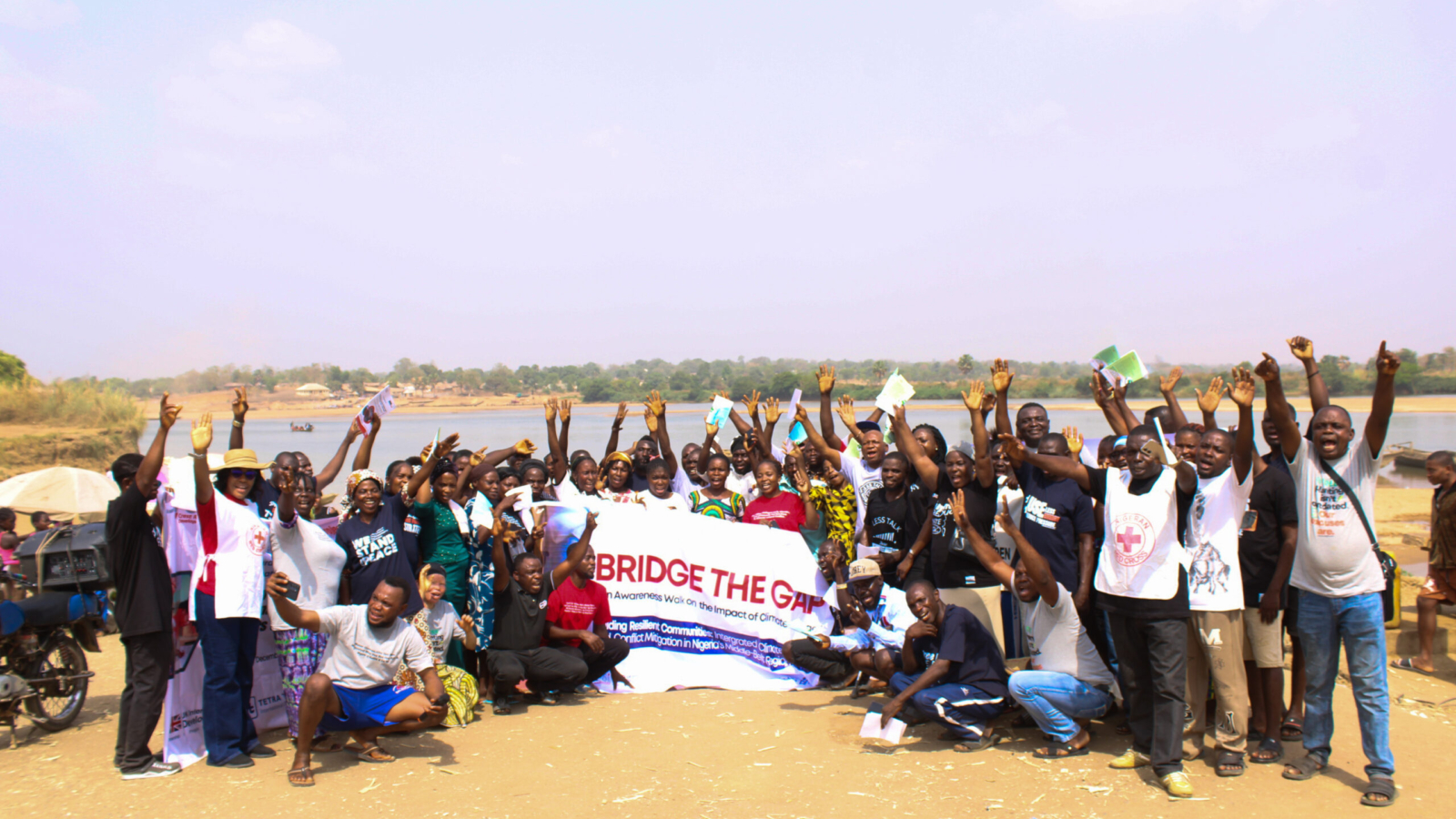
At a training session held at the Youth Centre in Buruku, 60 community members came together, not merely as participants, but as individuals stepping into a critical community function. As newly designated Early Warning Monitors, they are now positioned to support timely communication, link with relevant stakeholders, and promote early response within their communities.
From Awareness to Structured Response
For many participants, the signs of climate variability were already familiar, unusual river patterns, shifting rainfall, and prolonged dry spells had long been observed within their communities. What had been missing, however, was not awareness, but a structured system to translate these observations into timely action.
The training addressed this gap by shifting participants from passive observation to intentional and coordinated response.
Participants were guided on how everyday environmental changes can serve as early warning signals when properly identified, documented, verified, and communicated.
As one participant shared:
“This training has opened my eyes to how we can identify early signs of flooding and inform others before it becomes a disaster.”
Tools for Timely Action
To support the work of Early Warning Monitors and strengthen real-time information flow, participants were introduced to the Early Warning Early Response (EWER) platform, a digital tool designed to capture, verify, and disseminate climate risk information, including flood alerts, drought trends, and extreme weather patterns.
Recognizing varying levels of digital literacy, the training adopted a hands-on and inclusive approach. Participants were supported step-by-step to create email accounts, download the application, and practice submitting real-time reports.
In my MERL role, I supported participant onboarding onto the EWER platform by assisting with email setup and app usage, ensuring accurate attendance and registration, and capturing participant insights to inform ongoing learning and improve implementation. This ensured that participants were not only introduced to the tool but were able to use it confidently and independently by the end of the session.
As one participant noted:
“Even though I had some difficulty at first, I was able to download it and submit a report. This will help us share information quickly.”
Blending Technology with Trust
While digital tools enhance speed and coordination, participants emphasized that information in their communities still travels fastest through trusted and familiar channels such as community meetings, marketplaces, and local networks. The training therefore encouraged a blended approach, combining digital reporting tools with traditional communication systems to ensure wider reach, trust, and inclusion.
“I learned how to use both my phone and local communication methods to spread early warnings, which will make a big difference in our community,” one participant explained.
Why Verification Matters
Before the training, early warnings were often shared informally, sometimes without verification. Through the sessions, participants gained a clearer understanding of the importance of accuracy, validation, and coordination with relevant stakeholders.
“Before now, we only relied on observation without proper guidance. Now we understand how to verify information and pass correct messages to our people,” a participant reflected.
In early warning systems, speed matters, but accuracy remains essential.
Building Resilience from Within
Like many community-based interventions, the process was not without challenges. Some participants required additional time to adapt to digital tools, and occasional network constraints slowed progress. Yet these challenges reinforced an important lesson: resilience is not built under perfect conditions, but through continuous learning, adaptation, and collective effort.
By the end of the training, participants were no longer just attendees. They had become part of a growing, community-driven early warning system capable of identifying risks early, sharing timely information, and supporting coordinated responses.
One Community, Many Watchful Eyes
The experience in Buruku reflects a broader goal of the BRIDGE Project: strengthening local systems so that communities are not only aware of climate risks but are equipped to act on them.
Climate shocks may be inevitable, but their impacts do not have to be devastating. When communities are equipped with the right knowledge, supported with practical tools, and connected through trusted systems, they can act early, protect livelihoods, and reduce vulnerability. In Buruku, that shift is already underway.
Because sometimes, the difference between crisis and preparedness is not just a forecast, it is a person who sees the signs and chooses to act.