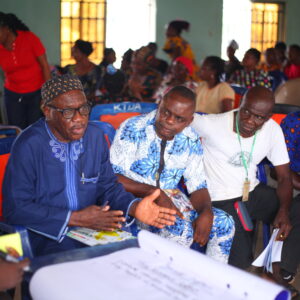
Youth FORB Flyer

CALL FOR APPLICATIONS: Youth of Faith for Peace: Advancing Freedom of Religion or Belief in Nigeria’s Middle Belt (YouthFORB)

Crest Research and Development Institute (CRADI) is seeking a highly skilled Data Analyst to join its team and support a diverse range of research activities both across Nigeria and internationally. This role is crucial to CRADI’s mission of fostering evidence-based solutions to tackle complex societal challenges, requiring a professional who can leverage advanced data management, analysis, and interpretation techniques to ensure that research outputs are not only insightful but also reliable and actionable.

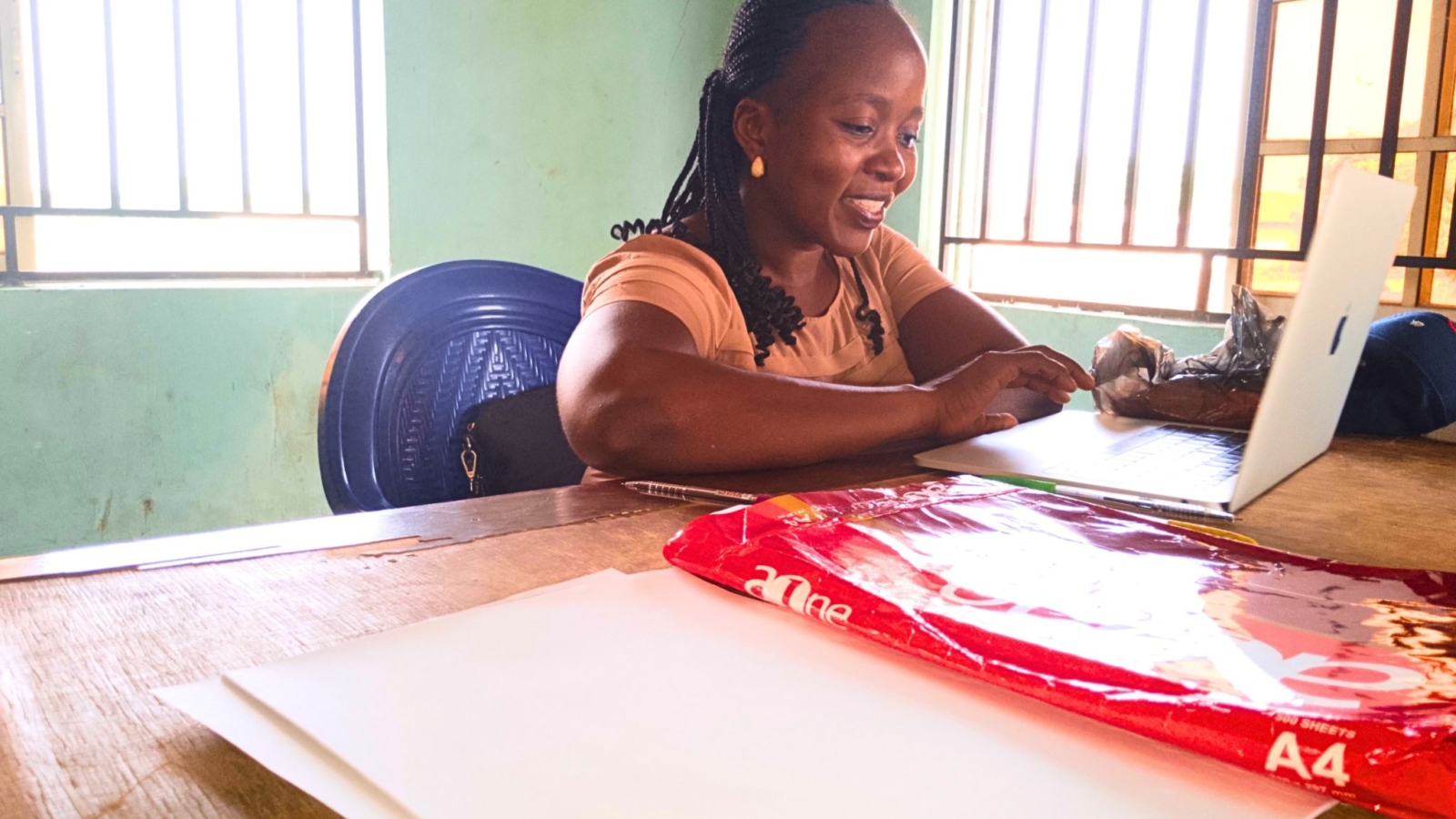
Bandin on duty

From Dialogue to Action: Buruku Communities Unite for Climate Resilience

By: Bandin Glory Joseph 


When the first rains arrived late in Buruku, many farmers returned to their fields only to find their seedlings already wilting. One elderly farmer described how he stood in the middle of his land and felt an unfamiliar fear. The rains had failed him, and for the first time in his life, he could not predict what the season would bring. That simple story, shared at the Buruku Youth Centre, captured the reason the community gathered. Climate change is no longer a distant idea. It is changing daily life in ways that people can see and feel. The meeting brought together seventy-two participants under CRADI’s BRIDGE Project. They included farmers, women, youth, traditional rulers and persons with disabilities. The Ter Buruku and a representative of the Local Government Chairman opened the session by acknowledging the challenges everyone in the room already knew too well. The rainy season is now shorter and more unpredictable. The heat is stronger. Water sources are drying up. The soil is losing the strength it once had. These shifts are affecting livelihoods, household survival and the future of young people who depend on the land.

After the opening remarks, the discussion quickly became personal. Elders shared memories of how their fields and rivers once behaved. They described streams that no longer flow throughout the year and soils that respond differently to planting. Women spoke about the pressure these changes place on their homes, their farms and their ability to provide food. They explained how sudden dry spells, erosion and new pest outbreaks are stretching the resources of many households. Youth voiced concerns about what lies ahead for their generation. They spoke about extreme heat, water scarcity, flooding and land degradation that threaten both farming and the wider community. Although each group entered the room with different experiences, their concerns pointed to the same reality. Farming inputs are becoming too expensive. Water is harder to access. Road networks make it difficult to reach markets, and agricultural extension services are not consistent enough to support farmers as they adapt to new conditions. Yet, despite these shared difficulties, the atmosphere was hopeful rather than discouraged.
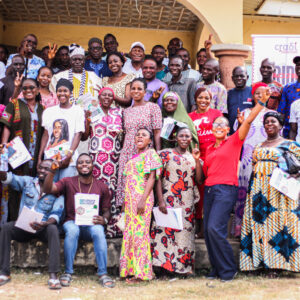
The conversation gradually shifted from describing problems to identifying workable solutions. Elders suggested planting varieties that survive dry conditions and exploring irrigation where possible. Women proposed practical actions such as planting trees around homesteads, adopting better seed varieties and forming women-led groups that can spread climate awareness. Youth offered their energy and creativity, suggesting community tree planting, learning safer agricultural practices and mobilising other young people to protect the environment. These ideas flowed naturally because they were rooted in the community’s lived experience.


By the end of the session, the room had shaped a clear direction. Participants agreed to strengthen existing community structures such as youth associations, women’s committees and farmer groups so that action can begin from within the community rather than waiting for outside support. They committed to regular awareness sessions that keep climate resilience at the centre of community conversations. They also agreed to promote improved farming practices in households and to welcome regular follow-up visits that sustain progress. Traditional rulers and local authorities were identified as essential partners whose continued involvement can ensure community action is supported by stronger governance. As people left the hall, the atmosphere was noticeably different. What began as a day of sharing concerns had transformed into a unified decision to act. The participants walked away with new knowledge, shared understanding and a sense of direction. Buruku cannot control the changing climate, but its people have chosen not to face it in silence or isolation. They are responding with clarity, unity and a firm belief that resilience starts from within the community itself. The BRIDGE Project is proud to support this journey. If you are a community member, practitioner or policymaker who wants to support or learn from these efforts, join us. Share your experiences, participate in upcoming trainings, or connect with CRADI to explore how your community can build climate resilience. Together, we can turn dialogue into action and create solutions that last.


Youth FORB Flyer

CALL FOR APPLICATIONS: Youth of Faith for Peace: Advancing Freedom of Religion or Belief in Nigeria’s Middle Belt (YouthFORB)

Crest Research and Development Institute (CRADI) is seeking a highly skilled Data Analyst to join its team and support a diverse range of research activities both across Nigeria and internationally. This role is crucial to CRADI’s mission of fostering evidence-based solutions to tackle complex societal challenges, requiring a professional who can leverage advanced data management, analysis, and interpretation techniques to ensure that research outputs are not only insightful but also reliable and actionable.

CPVI Announcement (2)

Call for Volunteers: Join the CRADI Professional Volunteer Initiative (CPVI)!Data Analyst

Crest Research and Development Institute (CRADI) is seeking a highly skilled Data Analyst to join its team and support a diverse range of research activities both across Nigeria and internationally. This role is crucial to CRADI’s mission of fostering evidence-based solutions to tackle complex societal challenges, requiring a professional who can leverage advanced data management, analysis, and interpretation techniques to ensure that research outputs are not only insightful but also reliable and actionable.

ChatGPT Image Oct 15, 2025, 08_01_32 PM

CONSULTANCY FOR BASELINE STUDY AND CLIMATE RISK & STAKEHOLDER MAPPING ASSESSMENT

Crest Research and Development Institute seeks a Monitoring, Evaluation, Research and Learning (MERL) Assistant who will support the development of research documents including research proposals, inception reports and evaluation reports and supervise field teams in data collection and the coordination of regional working group coordination meetings.

Crest Research and Development Institute (CRADI) Internship Programme

Program Location:      Nigeria (Jos, Plateau State)

Reports to Monitoring, Evaluation, Learning and Research Manager.

Background

Crest Research and Development Institute (CRADI), is an independent, non-profit research institute dedicated to improving the human condition through evidence-based research, human capital development, and developmental aid. We seek to advance humanity through research, sustainable development, and learning by adopting a multidisciplinary, community-friendly, and ethic-driven approach to support independent, high-quality research with an impact on business development, the public sector, civil society, and communities of focus.

CRADI partners with appropriate research, technology, development, communications, and governance institutions. Team members include people drawn from the academia, civil society, public and private sectors, as well as practitioners in various fields of endeavor who are concerned about the socio-political and economic problems of Africa.

Program Overview

Crest Research and Development Institute (CRADI) is excited to offer a competitive 6-month internship programme for individuals interested in gaining practical experience in monitoring, evaluation, research, and learning. The internship aims to equip participants with essential skills in development research, monitoring and evaluation and project management. While also fostering partnerships with development partners and NGOs to provide placement opportunities for interns.

The CRADI internship programme offers a well-rounded curriculum, combining theoretical knowledge with practical application, to equip interns with essential skills in project management, research, monitoring, evaluation, and learning. The learning phase provides intensive training in research methodologies, M&E basics, data analysis, report writing, and project management principles. During the paid internship phase, interns will actively contribute to real-world projects, gaining valuable experience and enhancing their professional growth. For exceptional interns, CRADI offers the possibility of post-internship placements to further their development and contribute to the broader development community. Through this comprehensive internship programme, CRADI is committed to nurturing the next generation of skilled and competent professionals in the field of monitoring, evaluation, research, and learning.

Program Duration

The internship programme will span 6 months, divided into two phases of three months each; Unpaid Learning and Paid Experience:

  • Learning Phase (First 3 months): The initial three months will focus on intensive training and skill development. During this phase, interns will work closely with our experienced team to enhance their knowledge in research methodologies, data analysis, report writing, and computer skills.
  • Paid Internship Phase (Second 3 months): The subsequent three months will be a paid internship period. Interns will be assigned to ongoing projects within CRADI where they will actively contribute to research and development initiatives.

Eligibility Criteria:

Applicants are required to meet the following eligibility criteria:

  • Basic knowledge of research statistics, report writing, and computer usage.
  • Recently graduated from relevant academic disciplines, such as social sciences, development studies, economics, or related fields.
  • Strong passion for monitoring, evaluation, research, and learning.
  • Evidence of completion of M&E fundamentals course on Global Health E-Learning Platform
  • Evidence of completion of Gender Based Analysis course at Women and Gender

Equality Canada (WAGE)

Alison

Internship Selection Process:

Application: Interested candidates will apply by filling this form here: Be sure to have all the items mentioned in the eligibility criteria.

Interview and Assessment: Shortlisted candidates will be invited for interviews and/or assessment tests to evaluate their suitability for the programme.

Selection: Final interns will be selected based on qualifications, skills, enthusiasm for MERL, and alignment with CRADI’s values and objectives.

Program Benefits:

  • Comprehensive training in research and evaluation methodologies.
  • Hands-on experience in real-world projects and initiatives.
  • Networking opportunities with professionals and organizations in the development sector.
  • Potential for continued engagement with CRADI or partner organizations after the internship.

CRADI’s Internship Programme offers a unique opportunity for young professionals to gain practical skills and experience in monitoring, evaluation, research, and learning. Through a rigorous selection process, in class learning and on the job experience, CRADI aims to provide a transformative experience for each intern, preparing them for a successful career in the development sector. We are committed to supporting the personal and professional growth of our interns and contributing to the advancement of humanity through evidence-based research and sustainable development.

How to Apply:

Interested candidates should Application follow the link here or copy and paste the application link below in your browser: https://forms.gle/TJ4v9nwURw118iUY9. Submissions should be made on or before 15th May, 2025.

Equal Opportunity: CRADI is an equal –opportunity employer and does not discriminate on the basis of race, color, religion, etc. Qualified women are strongly encouraged to apply. CRADI recruitment and selection procedures reflect our commitment to protecting children and vulnerable adults from abuse and exploitation.

Job Adverts

Data Analyst

Crest Research and Development Institute (CRADI) is seeking a highly skilled Data Analyst to join its team and support a diverse range of research activities both across Nigeria and internationally. This role is crucial to CRADI’s mission of fostering evidence-based solutions to tackle complex societal challenges, requiring a professional who can leverage advanced data management, analysis, and interpretation techniques to ensure that research outputs are not only insightful but also reliable and actionable.

African women entrepreneurs

Research Assistants ( Data collection for Women’s entrepreneurship development assessment)

Crest Research and Development Institute seeks a Monitoring, Evaluation, Research and Learning (MERL) Assistant who will support the development of research documents including research proposals, inception reports and evaluation reports and supervise field teams in data collection and the coordination of regional working group coordination meetings.

SHORT TERM TECHNICAL ASSISTANT (STTA) RESEARCH ASSISTANTS

Program States:         Lagos, Ogun, Edo, and Delta States

Number of slots:         4 (1 slot in each state)     

Reports to:                 Director of Research, Data Quality Assurance Manager and Monitoring, Evaluation, Learning and Research Associate (MERLA)

Duration:                    30 days           

Background

Crest Research and Development Institute (CRADI) is an independent, non-profit research institute dedicated to improving the human condition through evidence-based research and developmental aid. The Institute uses a multidisciplinary, community-friendly, and ethic-driven approach to support independent, high-quality research with an impact on business development, the public sector and civil society. CRADI partners with appropriate research, technology, development, communications, and governance institutions. Team members include people drawn from the academia, civil society, public and private sectors, as well as practitioners in various fields of endeavor who are concerned about the socio-political and economic problems of Africa.

Purpose of the Assignment

CRADI is conducting the final external Evaluation of a project titled “Promoting Evidence-Based Prevention Efforts to Reduce Trafficking in Persons”. The project is aimed at improving access to trusted information sources and promoting informed decision making by sensitizing potential migrants on regular migration options, vulnerabilities to trafficking in persons (TiP), and risks associated with irregular migration.  In addition, the project seeks to build institutional capacities and implement community-based actions in high-risk states of irregular migration such as Lagos, Edo and Delta. In collaboration with the Federal Government of Nigeria (FGN), the intervention aims to build the capacity of state and non-state actors to exercise evidence-based planning and monitoring of behavioural change communication to prevent TiP and Smuggling of Migrants (SoM). Secondly, through community-based actions (peer education, community dialogue, art-based competitions) and capacity building, the project aims to enable returnees, community members, government and non-government actors to take action to prevent exploitation and promote informed decision making on safe and regular migration pathways. The primary target audience is potential migrants aged 12-35 years from migration prone communities. The secondary audience includes key opinion leaders within target communities such as families, religious and traditional leaders who play an influential role in the decision-making process of potential migrants.

Scope of Work

The research assistants would be responsible for completing the following tasks under the guidance and supervision of CRADI’s Research team:

Ø  The research assistants’ contract will be on a need-for-work basis and is not a full-time role.

Ø  Participate in a two-day training workshop.

Ø  Participate in daily debrief meetings during data collection.

Ø  Ensure quality assurance of data, coordinate with the research team to ensure consistency and quality of interview transcripts in English.

Ø  Administer questionnaires to stakeholders and target beneficiaries in the target LGAs and communities of the project states, as well as providing important feedback on project’s field research activities.

Accountabilities/Responsibilities

The Research assistant will be responsible for the following:

v  Conduct virtual and in-person Key Informant Interviews (KIIs) and Focus Group Discussions (FGDs) and draft report for each

v  Ensure required tools, consent forms are completed.

v  Responsible for security and confidentiality of the electronic data.

v  Make sure that the digital devices are fully charged. 

v  Gather and accurately record responses on questionnaires provided by the research team.

v  Ensure that questionnaires have been thoroughly checked and completed.

v  Submit completed questionnaires and other equipment used in fieldwork to CRADI.

v  Compile findings in a format required by the research team.

v  As part of each assignment, participate in briefings, carry out data collection, data entry and/or reporting.

v  Recognize and give account of problems in obtaining data and provide useful feedback from field research activities

v  Shows a high level of integrity and will not fabricate responses or misrepresent the programme.

v  Confidently expresses self, able to clearly ask questions and help the respondent understand what is needed from her/him.

v  Able to build trust with people at the rural level and maintain confidentiality

v  Must be able to interpret and record responses appropriately without distorting the respondent’s meaning or confusing the reader.

v  Must be resident in one the state of assignment.

Qualifications and Experience Required

Education:
   
MSc, BSc or HND in Social Sciences or in a related field

Experience:   2 years field experiences in conducting quantitative and qualitative data collection.

Skills
and Knowledge:

  • Proven excellent report writing and organizational and documentation skills
  • Knowledge of Research Methodologies
  • Ability to prompt information without leading the interviewee
  • Ability to work under pressure and meet tight deadlines
  • Good interpersonal skills including good coordination and effective working relations with stakeholders
  • Excellent planning and time management skills
  • Proficiency in the use of Microsoft Office suite of applications
  • Demonstrable competence in Time Management
  • Ability to use online survey platform such as (Kobo-Collect, Survey Monkey, Google Forms etc.).
  • Excellent presentation, oral and written communication skills
  • Respect the security, dignity, and self-worth of respondents. The Research assistant has the responsibility to be sensitive to and respect differences amongst participants in culture, religion, gender, disability, age, and ethnicity.

Supervisory Responsibilities

The research assistants will supervise the enumerators and ensure data quality at the data entry stage.

Required Languages

  • English (Fluency in the local languages would be an added advantage)

Travel

  • Must be willing and able to travel to local and difficult terrains of Lagos, Ogun, Edo, and Delta States as indicated in the program States and LGAs.

How to Apply

Interested candidates should kindly fill the form here. Applications must reach us on or before 22nd of September, 2022. Only shortlisted candidates will be contacted for the interview.

Equal Opportunity

CRADI is an equal –opportunity employer and does not discriminate on the basis of race, color, religion, etc. Qualified women are strongly encouraged to
apply.
CRADI recruitment and selection procedures reflect our commitment to protecting children and vulnerable adults from abuse and exploitation.