By Adide Samuel Emelis, Project Manager, BRIDGE Project – CRADI
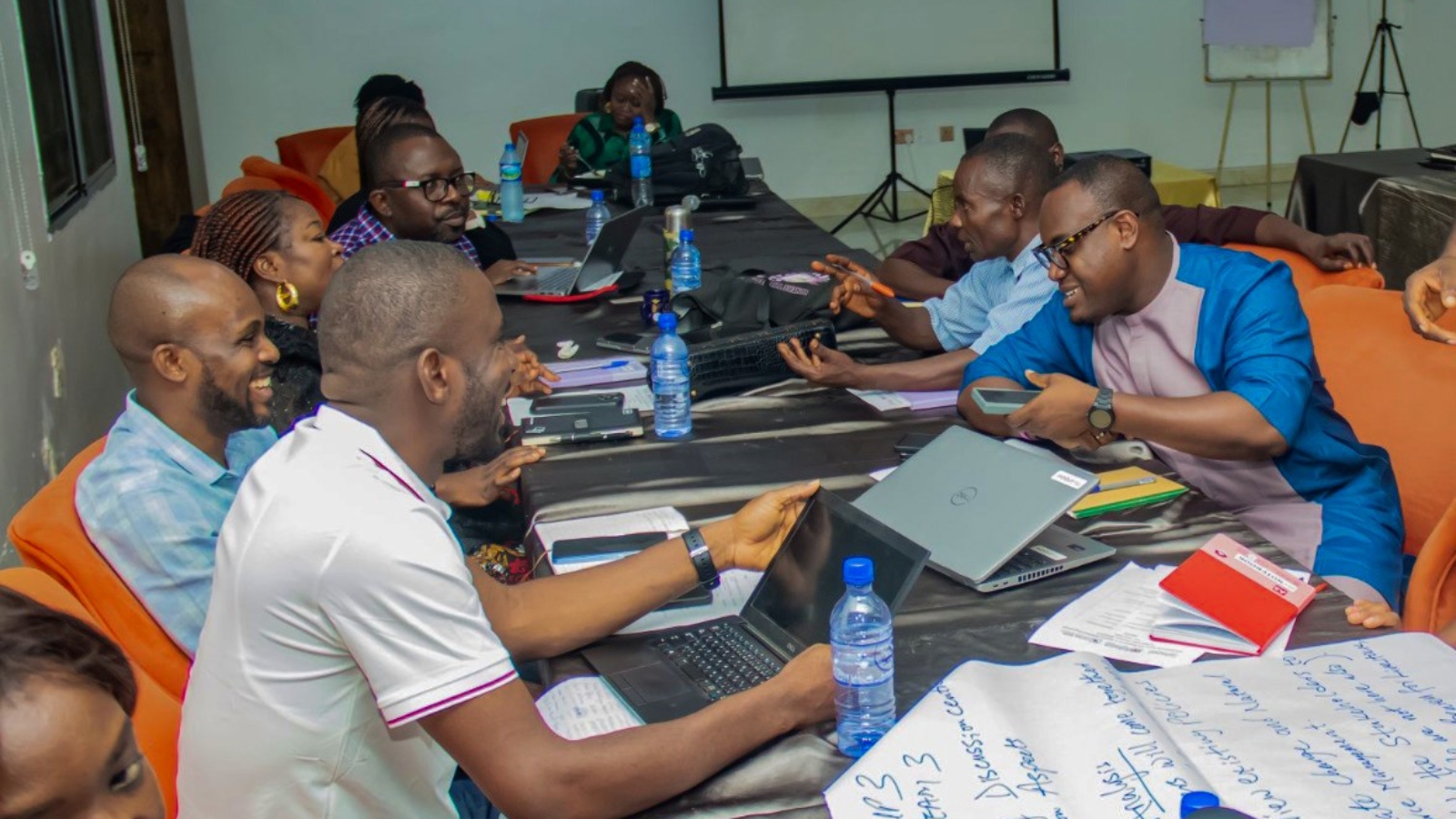
There’s something quietly powerful about sitting in a room where everyone; implementing partners, government agencies, programme teams; is genuinely working toward the same goal. That’s what I experienced in Makurdi from the 16th to 18th of June, 2026, at the SPRiNG Year 3 Co-Creation Workshop, and I haven’t stopped thinking about it since.
Let me give you a little context.
When Crest Research and Development Institute (CRADI) joined the Strengthening Peace and Resilience in Nigeria (SPRiNG) programme in Year 2 as an implementing partner on the “Building Resilient Communities: Integrated Climate Adaptation and Conflict Mitigation in Nigeria’s Middle-Belt Region (BRIDGE)” Project, our eight-month initiative focused on climate adaptation and conflict mitigation across Plateau and Benue States. We came in with energy, commitment, and honestly, a few gaps we didn’t even know we had. No one sat us down at the start and said, “here’s how the programme thinks, here’s what we’re tracking, here are the indicators that matter.” We hit the ground running, and we ran hard. But there were moments; in reporting cycles, in implementation decisions; where we could feel the disconnect. We were doing good work, but we weren’t always singing from the same hymn sheet as the broader programme.
That gap wasn’t anyone’s fault. It was structural. And it showed up in ways that only become visible in retrospect. So, when the invitation arrived for the Year 3 Co-Creation Workshop, I wasn’t entirely sure what to expect. What I got was something I wish we’d had from day one.
Over three days, the SPRiNG team walked us through everything: the revised state implementation strategy, workstream priorities, the MEL framework, the GEDSI approach, even the nuts and bolts of proposal and budget development. Government ministries and agencies were in the room too: the Benue State Commission for Peace and Reconciliation; Bureau for International Cooperation and Development; the Ministry of Women’s Affairs, the Benue Civil Protection Guard; Ministry of Water Resources, Environment, and Climate Change – the full ecosystem of actors that this work ultimately depends on. We didn’t just receive information; we brainstormed together, identified intervention areas collaboratively, and by the close of the workshop, we witnessed the unveiling of the SPRiNG Benue State Compact (2026–2027) by the SPRiNG Team Leader, Dr. Okoha Ukiwo. That moment felt like more than a formality. It felt like a commitment made in public, by people who had just spent three days building it together.
Here’s what struck me most: this is what adaptive programming actually looks like in practice. It’s easy to talk about “learning and adaptation” as a concept. It’s another thing entirely to watch a programme look at its Year 2 experience, acknowledge where the gaps were, and deliberately redesign its entry point for partners in Year 3. That takes institutional honesty. And it makes a real difference.
As implementing partners, we now go into Year 3 knowing what’s expected of us, what success looks like, and how our work connects to the larger picture. That clarity isn’t just administratively convenient; it’s the difference between implementing in isolation and implementing as part of something coherent.
Co-creation, when it’s done well, isn’t a workshop format. It’s a philosophy. It says: the people doing the work on the ground have knowledge that should shape the programme, not just execute it. And reciprocally, partners deserve to understand the programme well enough to genuinely contribute to it.
I left Makurdi feeling something I don’t always feel at the end of a three-day workshop: genuinely ready. Ready to go into Year 3 not just with a plan, but with context, alignment, and a sense of shared ownership.
That, to me, is worth writing about.