By: Bandin Glory Joseph
When the first rains arrived late in Buruku, many farmers returned to their fields only to find their seedlings already wilting. One elderly farmer described how he stood in the middle of his land and felt an unfamiliar fear. The rains had failed him, and for the first time in his life, he could not predict what the season would bring. That simple story, shared at the Buruku Youth Centre, captured the reason the community gathered. Climate change is no longer a distant idea. It is changing daily life in ways that people can see and feel. The meeting brought together seventy-two participants under CRADI’s BRIDGE Project. They included farmers, women, youth, traditional rulers and persons with disabilities. The Ter Buruku and a representative of the Local Government Chairman opened the session by acknowledging the challenges everyone in the room already knew too well. The rainy season is now shorter and more unpredictable. The heat is stronger. Water sources are drying up. The soil is losing the strength it once had. These shifts are affecting livelihoods, household survival and the future of young people who depend on the land.
After the opening remarks, the discussion quickly became personal. Elders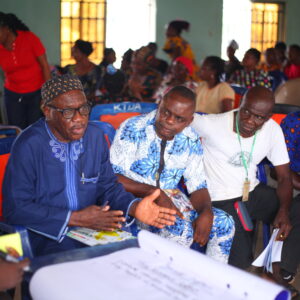 shared memories of how their fields and rivers once behaved. They described streams that no longer flow throughout the year and soils that respond differently to planting. Women spoke about the pressure these changes place on their homes, their farms and their ability to provide food. They explained how sudden dry spells, erosion and new pest outbreaks are stretching the resources of many households. Youth voiced concerns about what lies ahead for their generation. They spoke about extreme heat, water scarcity, flooding and land degradation that threaten both farming and the wider community. Although each group entered the room with different experiences, their concerns pointed to the same reality. Farming inputs are becoming too expensive. Water is harder to access. Road networks make it difficult to reach markets, and agricultural extension services are not consistent enough to support farmers as they adapt to new conditions. Yet, despite these shared difficulties, the atmosphere was hopeful rather than discouraged.
The conversation gradually shifted from describing problems to identifying workable solutions. Elders suggested planting varieties that survive dry conditions and exploring irrigation where possible. Women proposed practical actions such as planting trees around homesteads, adopting better seed varieties and forming women-led groups that can spread climate awareness. Youth offered their energy and creativity, suggesting community tree plantin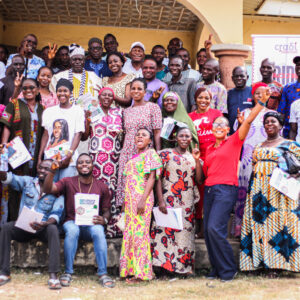 g, learning safer agricultural practices and mobilising other young people to protect the environment. These ideas flowed naturally because they were rooted in the community’s lived experience.
By the end of the session, the room had shaped a clear direction. Participants agreed to strengthen existing community structures such as youth associations, women’s committees and farmer groups so that action can begin from within the community rather than waiting for outside support. They committed to regular awareness sessions that keep climate resilience at the centre of community conversations. They also agreed to promote improved farming practices in households and to welcome regular follow-up visits that sustain progress. Traditional rulers and local authorities were identified as essential partners whose continued involvement can ensure community action is supported by stronger governance. As people left the hall, the atmosphere was noticeably different. What began as a day of sharing concerns had transformed into a unified decision to act. The participants walked away with new knowledge, shared understanding and a sense of direction. Buruku cannot control the changing climate, but its people have chosen not to face it in silence or isolation. They are responding with clarity, unity and a firm belief that resilience starts from within the community itself. The BRIDGE Project is proud to support this journey. If you are a community member, practitioner or policymaker who wants to support or learn from these efforts, join us. Share your experiences, participate in upcoming trainings, or connect with CRADI to explore how your community can build climate resilience. Together, we can turn dialogue into action and create solutions that last.